5.0

Garage Door Types and How They Work
1. Roller Garage Doors
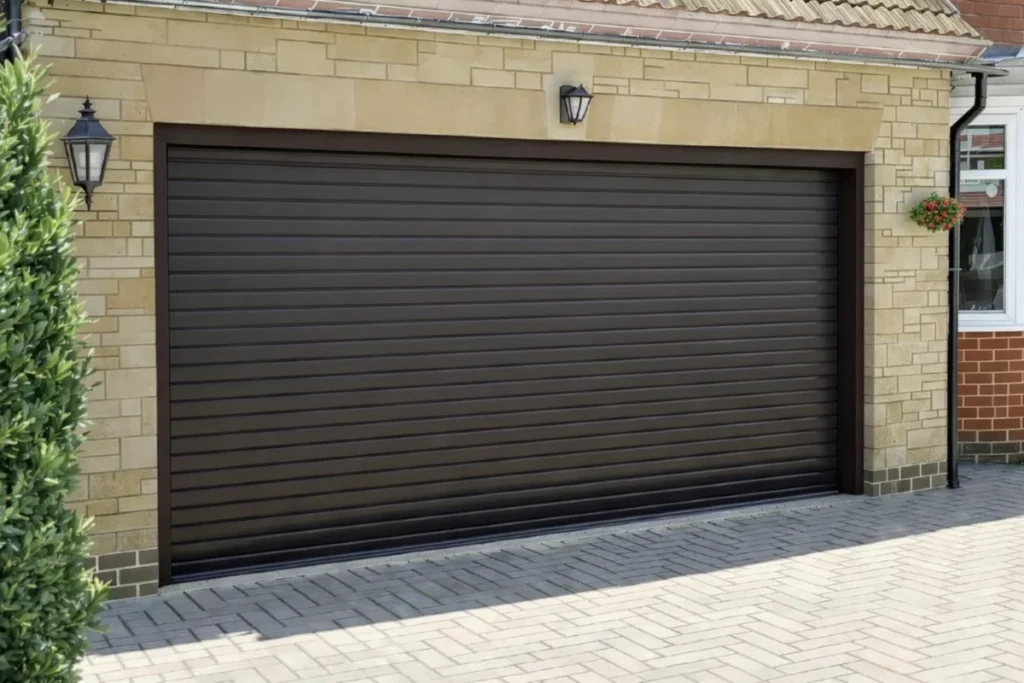
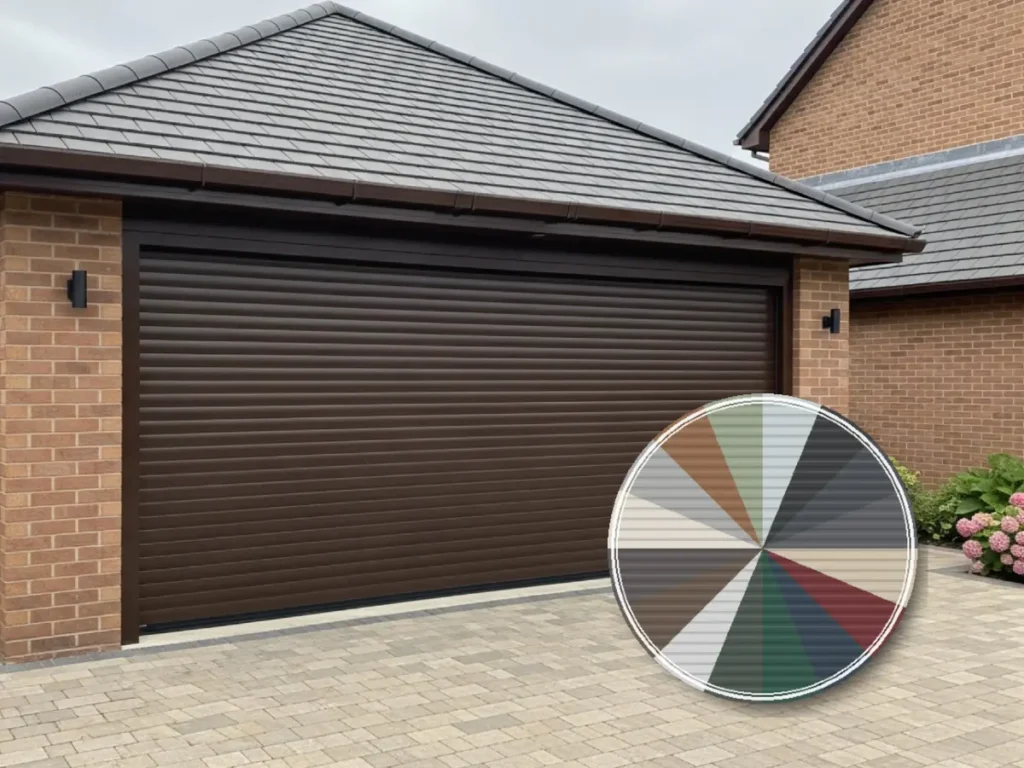
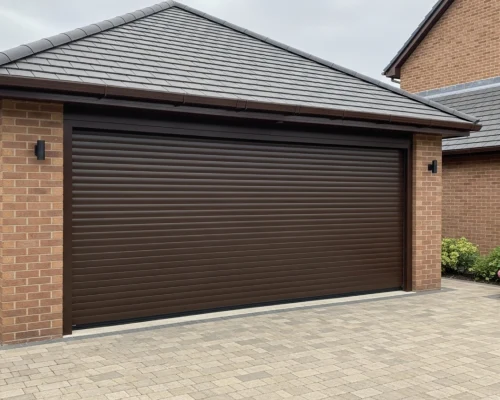
A roller garage door is made from interlocking aluminium slats that roll straight up and neatly coil into a box above the opening. Because it doesn’t swing out, it’s perfect for homes with short driveways or limited space. The design also leaves your ceiling clear and, with insulated slats and seals, helps keep the garage warmer and quieter.
Best for: driveways with little space in front, homes where headroom is needed for storage, and anyone who wants a neat, modern look.
How they work: the slats rise vertically and roll into a compact box above the door opening.
Pros: saves space, easy to use, looks smart, works well with automation, available in many colours and finishes, offers good insulation.
Cons: needs accurate measuring and straight walls, exposed locations may require extra wind protection, and some headroom is needed for the box and guides.
When to choose: if your car needs to park close to the door, you want hassle-free electric operation, or your garage ceiling has obstacles that rule out other door types.
Find out more: browse our roller garage doors range, arrange roller garage door installation in Norfolk and Suffolk, or order a DIY roller garage door kit with delivery across the UK.
2. Sectional Garage Doors
A sectional garage door is made from four to six eight rigid, insulated panels that lift vertically and then slide back along the ceiling on tracks. Because it opens straight up without swinging out, it saves driveway space while sealing tightly around the opening edges. These double-skinned, foam-filled panels deliver excellent thermal performance and noise reduction, often better than an equivalently sized wall. Plus, they look sleek and can include windows, custom finishes or a pedestrian door.
Best for: attached garages, homes where insulation and quiet operation matter, and anyone wanting a premium finish.
How they work: the panels rise vertically and then nest flat under the ceiling on horizontal tracks.
Pros: great insulation, very secure and durable, smooth quiet automation, wide design and finish options.
Cons: requires ceiling track space and backroom, and precise measuring to get a square, level fit.
When to choose: if your garage connects to your house, you want low heat loss, or you want a flush, high-spec appearance.
Looking to install? book your sectional garage door installation in Norfolk or Suffolk, or learn more on our garage door installation page.
3. Up-and-Over Garage Doors
An up-and-over door is the classic one-piece design. The single panel tilts out and then lifts up into the garage on pivoting arms. There are two main types: canopy, which leaves part of the panel sticking out when open, and retractable, which pulls the panel fully inside. They are popular for their simplicity and lower cost, but they do need clear swing space in front and don’t insulate as well as modern options.
Best for: detached garages, budget-friendly projects, and homes where swing space isn’t an issue.
How they work: a single panel tilts outwards and then up. Canopy leaves an overhang; retractable tucks fully inside on tracks.
Pros: affordable, simple design, easy to find in a wide range of sizes.
Cons: requires driveway space to open, limited insulation, heavier panels can be harder to automate.
When to choose: if you want a straightforward, low-cost solution and have plenty of space in front of the garage.
4. Side-Hinged Garage Doors
Side-hinged doors work just like a pair of external house doors. They swing open on hinges, usually outward, giving quick walk-in access without opening the full garage. They are available in steel, aluminium, or timber, and can be designed with good seals and locks for extra insulation and security. They suit traditional homes and are popular for garages used as workshops or storage.
Best for: workshops, cycle storage, and heritage-style homes.
How they work: two leaves on side hinges swing open (usually outwards).
Pros: very quick pedestrian access, traditional look, no ceiling tracks, simple mechanism with fewer moving parts.
Cons: needs flat ground and clearance for the leaves to swing, can catch the wind if not latched, limited automation options.
When to choose: if you use your garage more for storage or hobbies than for parking a car, and you want easy on-foot access.
5. Round-the-Corner (RTC) Garage Doors
Round-the-corner doors, also called side-sliding doors, move sideways along a curved track and park neatly against the inside wall. They are ideal when headroom is limited or when openings are unusually wide or arched. Because they slide sideways, you can also open them part-way for quick walk-in access without moving the entire door.
Best for: wide or arched openings, garages with low ceilings, and situations where partial opening is useful.
How they work: vertical slats or narrow panels slide sideways along a curved track and stack against an inside wall.
Pros: very little headroom needed, flexible partial opening, handles awkward openings well, smooth on large spans.
Cons: higher cost than other door types, needs a long clear wall inside the garage, more complex to fit.
When to choose: if your garage has an unusual shape or very little headroom, or if you want the option of opening just part of the door.
Cost Comparison (Typical UK Prices)
| Door Type | Typical Price Range (single, inc. VAT) | Notes |
| Roller | £900 to £1,500 (electric, insulated) | Aluminium slats, motor and remote. Save space. |
| Sectional | £1,000 to £1,800 (manual/electric) | Insulated steel panels, superior U-values. |
| Up & Over | £800 to £1,300 (manual) | Single-panel steel or timber; canopy or retractable styles. |
| Side-Hinged | £800 to £1,400 (timber manual) | Two-leaf timber or steel doors, wide access and traditional look. |
| Round-the-Corner | £2,000+ (custom, large openings) | Sliding panel, minimal headroom, niche solution. |
Prices depend on size, material, insulation, and extras like windows or automation. Always compare like-for-like specifications when getting quotes.
Manual vs Electric Operation
All these door types can be either manual or automatic:
- Manual Doors: Require lifting by hand (up-and-over, hinged) or using a crank/chain (roller, some sectionals). Manual is fine for light occasional use. It’s cheaper up-front but less convenient.
- Electric Doors: Have a fitted motor and remote control. Electric garage door is ideal if you use the garage frequently, have limited mobility, or want hands-free use in rain/narrow streets. Remote-control motors use rolling codes for security. Modern openers include safety edges or sensors to auto-reverse if something is in the way, and have manual release for power cuts. Demand is high for electric operation on rollers and sectionals; most up-and-over doors can also be fitted with a motor kit.
If choosing electric, ensure the motor is correctly sized for the door’s weight. Ask if the motor has features like auto-stop, soft-start, and overload protection.
British Standards and UKCA Marking
Every new garage door in the UK must meet strict safety and performance rules. The main standard is BS EN 13241, which sets limits for impact strength, safe operating forces and durability.
UKCA mark: all powered doors must display the UKCA marking, supported by a Declaration of Performance or Conformity. This is your proof the door has been built and tested to the right standard.
Safety edges and sensors: electric doors must stop and reverse if they hit an obstacle. The HSE powered doors guide explains why regular testing is essential.
Manual override: every electric garage door must include a manual release so you can still open it during a power cut.
Choose a supplier who can prove compliance and provide spares. All TWF doors are electric and UKCA marked, with compliant safety edges, manual release, warranty and full documentation included. For replacements, see our garage door accessories shop.
Planning permission and legal notes
- Replacing like for like or changing the style or colour of a garage door usually does not need planning permission. This sits under permitted development.
- Exceptions: listed buildings, conservation areas, or where conditions on a previous permission restrict alterations. If in doubt, check with the Local Planning Authority. The official Planning Portal explains the rules clearly.
Converting a garage into living space is a different project and may need permission and building control. That is outside the scope of this door guide, but note it is treated differently in planning policy.
Choosing the Right Door: Space & Use-case
Think about how you’ll use the garage day to day. Are you mainly parking, storing tools, or using it as a workshop?
Quick foot access: side-hinged doors or roller doors with a pedestrian mode are handy.
Large vehicles / short driveways: sectional and roller doors open vertically, so no risk of hitting tall cars.
Limited headroom: roller or round-the-corner doors need very little ceiling space.
Plenty of headroom: almost any type works, though sectionals make best use of the space.
Multiple access points: sectionals with a pedestrian door or side-hinged doors save opening the full width.
- Local climate (Suffolk & Norfolk): exposed to wind, rain and salt spray. Rollers with wind-locks or insulated sectionals give better weather protection. Choose corrosion-resistant materials for coastal homes and rinse doors regularly to clear salt.
- Aesthetics: match the door to your property. Timber-look side-hinged doors suit cottages, sleek sectionals fit modern builds, and up-and-over canopy doors suit classic semis. Most types can be customised in colours and woodgrain finishes.
Types of Fitting
How the door is mounted affects the installation and opening size:
- Face Fit (Frame Fit): The door’s frame or guides mount on the face of the wall around the opening. This preserves the full internal width of the garage, as the frame sits outside the reveal. It’s the common method for roller doors and some sectionals. It is also easier if the brick reveals are uneven or low.
- Reveal Fit (Built-In): The door frame fits inside the opening between the wall reveals. The door sits flush with the wall surfaces. This can look neater on some properties, but reduces opening width by the frame thickness. It requires that both side reveals are even and at least ~50 mm thick for fixing.
Choose fitting style based on your wall construction and desired look. For roller doors and sectional doors, face fixing is often preferred to maximise drive-through width. For up-and-over or side-hinged, “reveal fit” into the opening is most common.
DIY vs Professional Installation
DIY kit:
Why choose it: perfect if you like hands-on projects, want to save on labour costs, and prefer to work to your own schedule. You’ll also understand exactly how your door works, making future adjustments simpler.
Things to keep in mind: careful measuring and safe fixing are important, and you’ll be responsible for wiring and testing the safety edge.
Our DIY roller garage door kit is designed to make the process straightforward. Each kit includes a cut-to-size curtain, barrel and motor, guides, controls and a clear user manual. We deliver nationwide from our Norfolk base, and offer friendly phone support if you need advice along the way.
Professional fitting:
Why choose it: ideal if you’d rather leave everything to the experts. We take care of the survey, measuring, compliance checks, full installation, testing and tidy handover. You get a seamless service and a neat, fully-documented warranty.
Things to keep in mind: the cost is higher than supply-only, but you get complete peace of mind and zero hassle.
For customers in Suffolk and Norfolk, we offer full garage door installation, with dedicated services for roller garage door installation and sectional garage door installation.
Measuring and Fit: Get It Right
Accurate measurements are crucial to a successful fit. Before ordering or installing, take careful measurements of the opening and surroundings:
- Width and Height: Measure the internal width and height of the opening at three points each (left, centre, right) and use the smallest of each. Walls can be out of square, so using the smallest avoids a door being too big. Record in millimetres.
- Headroom: Measure from the top of the opening to the ceiling or lowest obstruction. Roller and sectional doors require sufficient headroom for the drum or panels. Round-the-corner doors need much less height.
- Side Room: Measure from each side of the opening to any obstruction (window, meter box, electrical conduit, etc.). Most roller/sectional tracks or frames need a clear side-lintel space (typically 50 to 100 mm). Side-hinged doors need space for hinges/frames on both sides.
- Floor Level: Check if the floor is perfectly level or slopes. If there is a drop, note this; you may need a larger threshold plate or adjustable bottom seal to close gaps.
- Lintel/Frame Condition: Inspect the top beam (lintel) above the door. If it is weak or crumbling, arrange repairs before attaching tracks or frames.
Use a rigid steel tape measure, pencil and paper to record all dimensions. Double-check everything before confirming an order of DIY kit. Mistakes in measurement are one of the most common causes of doors not fitting properly.
Maintenance Tips to Keep Your Garage Door Running Smoothly
A little regular care will keep your door quiet, safe and reliable for years:
Clean the surface: wipe slats or panels with mild soapy water to remove dirt and grime.
Keep tracks clear: check guides and tracks for debris that could cause sticking or noise.
Lubricate moving parts: apply a light oil or spray to hinges, rollers and springs as recommended in your manual.
Test safety features: once a month, test the safety edge and photocells to make sure the door stops and reverses correctly.
Check the remotes: replace remote-control batteries before they run flat.
Inspect fixings: after storms or high winds, check brackets and screws are still tight.
Coastal care: near the sea, rinse off salt deposits and let the door dry fully before closing.
Listen for changes: if you hear grinding or straining, stop using the door and get the fault checked. Running a failing motor will only make things worse.
Key Takeaways and Next Steps
- Measure Carefully: Always measure your garage opening accurately (three points for width/height) and note headroom and sideclearances. Double- and triple-check the dimensions before ordering.
- Pick the Best Type: Use our comparison above and questions to choose the best door for your space and use. For tight driveways or tall vehicles, consider roller or sectional. For budget builds or traditional style, up-and-over or hinged may suffice.
- Consider Insulation: If your garage is attached to living space or you use it often, an insulated door (sectional or insulated roller) will keep comfort and reduce bills.
- Professional Fitting vs DIY: Decide whether to use a local installer (we serve Suffolk and Norfolk with installation services) or tackle a DIY kit (available nationwide). A professional fitting will usually give the cleanest result and maintain warranties. For those handy with tools, a DIY roller garage door kit can be a cost-effective route.
- Check Compliance: Ensure any new door meets BS EN 13241 standards. It should have the CE/UKCA mark and come with safety features as required.
- Legal Rules: In most cases you won’t need planning permission to replace a garage door, but do verify if special conditions apply.
- Maintenance: Plan to inspect and clean the door regularly. Treat coastal doors to fresh-water rinses and check weather seals, lubricate moving parts, and test safety edges as part of an annual routine.
By carefully measuring, choosing the right style and ensuring professional standards, you’ll end up with a garage door that looks good, operates smoothly and lasts for decades. Whether you enlist TWF Roller Garage Doors for expert installation in Suffolk/Norfolk or install a diy roller garage door kit yourself, this guide should help every UK homeowner make an informed decision.
Sources
Authoritative industry sources and standards were used to compile this guide, including manufacturer guides and UK regulations. These references are provided to ensure accuracy and credibility.
FAQs
Do I need planning permission to replace my garage door?
Usually no. Replacements normally fall under permitted development. Listed buildings or conservation areas are exceptions. Check your council or the Planning Portal if you are unsure.
Which type is warmest and quietest?
Sectional doors are the benchmark for sealing. Roller doors with insulated slats and good bottom and side seals are a strong second.
Which type is best for a short driveway?
Roller or sectional. Both open vertically and do not swing out.
How long does a door last?
With sensible maintenance, expect well over a decade. Premium doors last much longer. Environment, use, and care make the difference.
What if there is a power cut?
Use the manual override shown at handover. If the garage is your only way in, make sure the external override is installed and that you keep the key accessible.
Will you install outside Norfolk and Suffolk?
We focus our fitting service on Norfolk and Suffolk for quality and response times. For everywhere else in the UK, order a roller garage door kit and self-fit with our support.