5.0

The first hard frost of the winter is when roller garage doors ring our phones: slow, juddering, stopping halfway or doing nothing at all. Most of those calls end with a two minute fix, and this guide runs through the checks in the order an engineer would. It is the cold weather companion to our all year guide to a roller garage door that is not closing and to our winter preparation checklist.
Why cold weather changes how a roller door behaves
Four things change when the temperature drops. Old lubricant thickens, so the curtain drags in the guides. The rubber safety edge along the bottom rail stiffens and becomes more sensitive. Batteries in your fob and in a wireless safety edge transmitter deliver less when cold, so a tired one gives up. And any water in the guides, under the bottom seal or on the floor freezes overnight.
First check: is the door frozen to the floor?
If the door will not lift and you can hear the motor trying, stop pressing the button. The bottom seal may be frozen to the floor, and a tubular motor pulling against ice can damage the curtain or trip its own thermal cut-out. Look along the bottom edge from outside: ice, packed snow or frozen leaves at the seal are the giveaway. Clear it by hand, work along the seal with a plastic scraper, and pour lukewarm water along the bottom if it needs it. Avoid boiling water, which can crack a cold seal, and avoid salt, which corrodes aluminium. Once the seal is free, give it a minute and try again. If the garage has no other door, the external manual override lets you wind the door up from outside meanwhile.
Stiff or juddering travel: the guides and the curtain
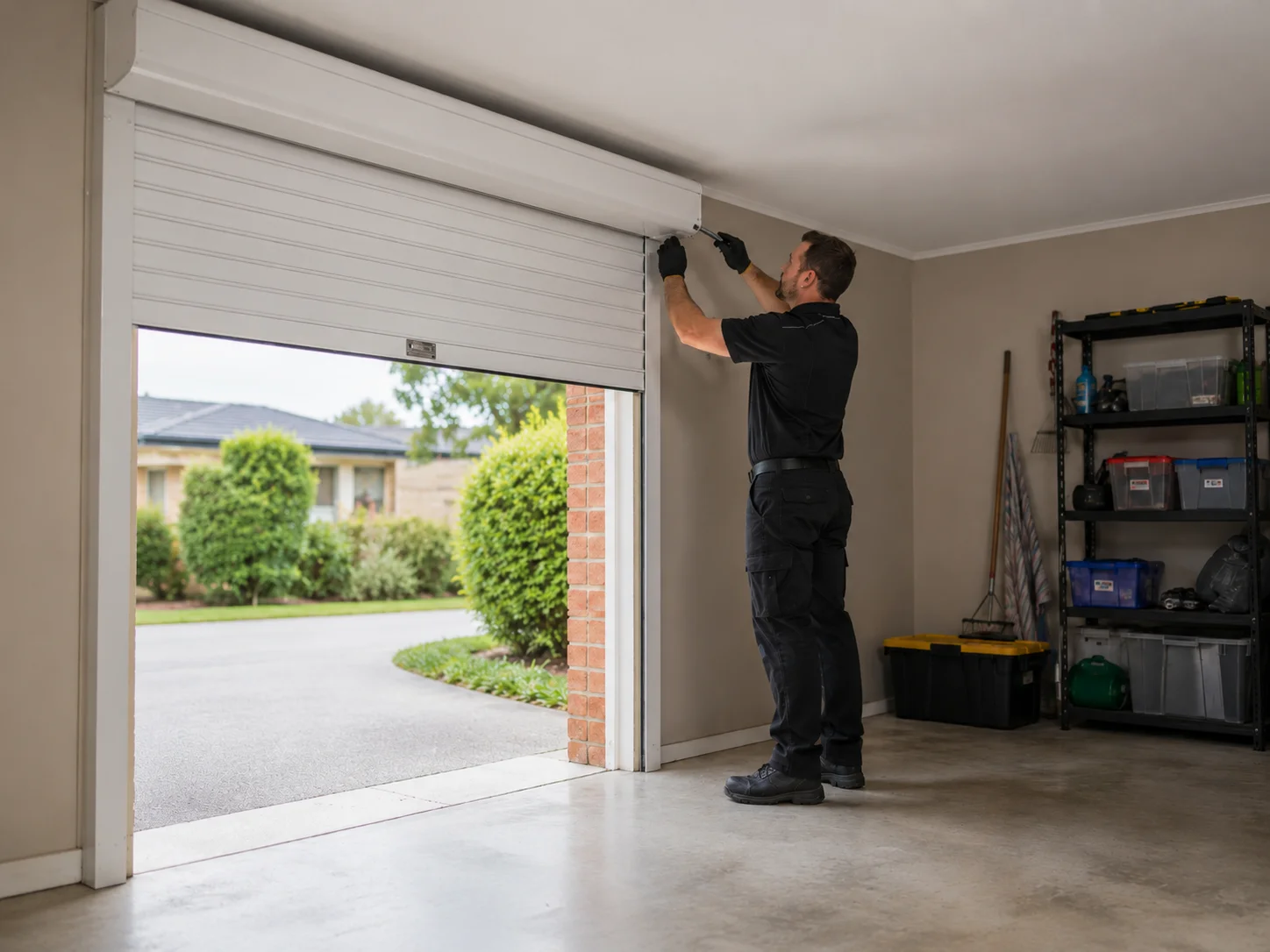
A door that moves but judders or sounds laboured is nearly always a guide problem. Shine a torch up the guide runners on both sides and look for grit, leaves, cobwebs and the dark line of old grease turned to paste. Wipe the guides out with a cloth, then apply a light silicone spray to the guides only, never to the curtain, which should run dry. If the curtain catches at the same point every time, a damaged slat is the likely cause, and our slat replacement guide explains how one is swapped.
The door starts, then stops or goes back up
If the door comes down, stops and rises again, the safety edge has detected something, which is the system working as designed. In winter the cause is usually a stiff, frosted rubber edge triggering on its own, ice or a frozen ridge on the floor, or damp in the edge connection. Wipe the bottom rail dry, clear the floor line, and check the wire or the wireless transmitter at the bottom of the curtain. If the door still reverses with nothing in the way, the edge may need replacing: the Light Guard safety edge is £150 in our shop, and the builder's safety edge kits are £135 hard wired and £180 wireless, prices as listed when this guide was written. A door that stops short of the floor every time has a drifted stop point, which our not closing guide covers under limit settings.
Nothing happens when you press the fob
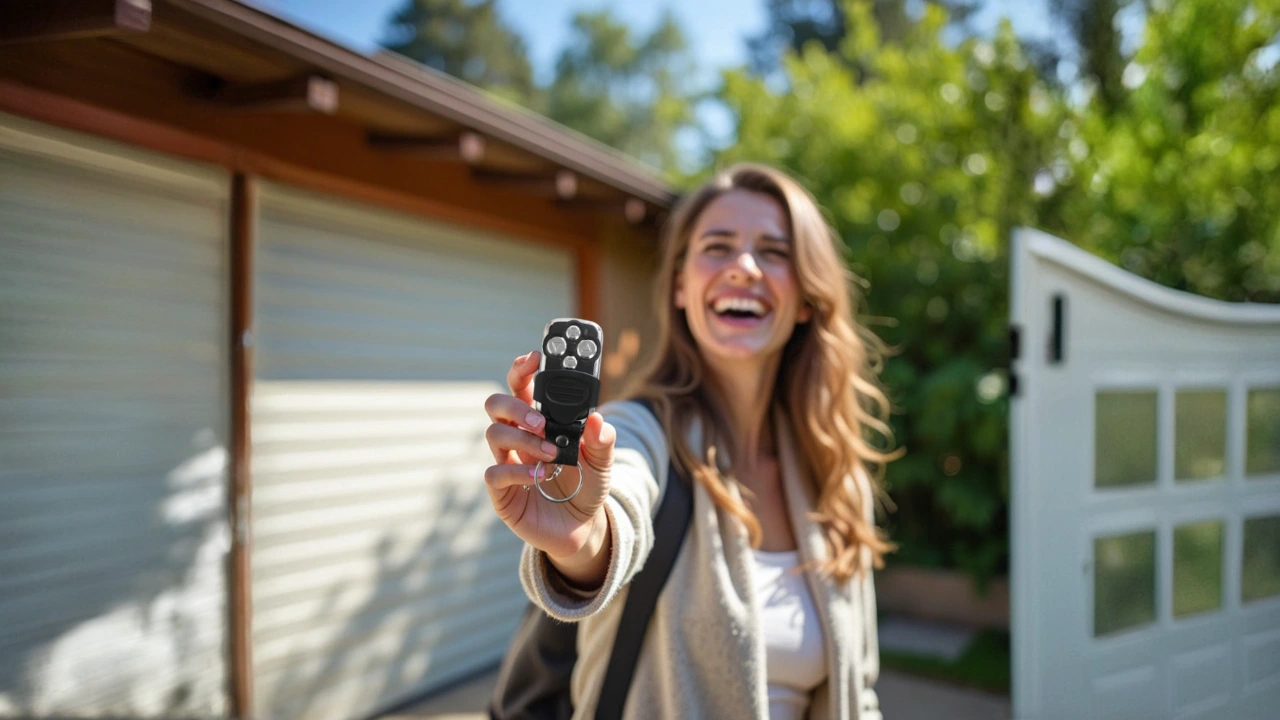
Work from the cheapest cause outwards. Try the key switch, or the wall button if you have one. If the door moves from those but not from the fob, the fob battery is the problem, and a Eurokit fob is £20 in our shop with Teleco fobs at £25 and £35; our guide to garage door remotes and fobs explains which matches your control panel. If nothing works from any control, check the socket or fused spur and then the consumer unit. If there is power and still nothing, the control panel is the next suspect, and our Teleco control panel guide explains its lights and codes. In a power cut, our guide to opening a roller garage door without power shows the winding handle.
The motor hums, runs slowly or gives up
A tubular motor that hums without moving the curtain is being asked to lift something it cannot, usually a frozen seal or a jammed guide, so fix that first. A motor that runs, then refuses for twenty minutes, has tripped its thermal protection; let it cool. A motor that has become slow and noisy over a season is wearing out, and a new one is a spare rather than a new door: a 50Nm tubular motor is £70 and an 80Nm 15rpm motor is £100 in our shop, our motor sizing guide explains which fits, and most people book the fitting as a repair.
Spare, adjustment or repair call: a quick table
| Symptom | Likely cause in the cold | What you can do | If that fails |
|---|---|---|---|
| Will not lift, motor strains | Seal frozen to the floor | Clear the ice, wait, try again | Call if it strains with the seal free |
| Judders or sounds laboured | Dirty or greasy guides | Clean the guides, light silicone | A damaged slat: spare or repair |
| Stops and goes back up | Safety edge triggering | Dry the edge, clear the floor line | Safety edge from £135 |
| Fob dead, key switch works | Fob battery | New battery or new fob | Fob from £20 |
| Nothing from any control | Power or control panel | Check the socket, fuse and panel lights | Call if power is present |
| Hums, slow, cuts out | Overloaded or tired motor | Clear the load, let it cool | Motor from £70, fitted as a repair |
In Norfolk and Suffolk our engineers repair roller garage doors: minor repairs such as remote and lock issues or adjustments start from around £60 to £75, and larger jobs such as a motor or control unit from around £350. Book online, or ask our Norfolk and Norwich teams on 01603 737183. If every winter brings a new fault, a garage door service checks the curtain, guides, motor, control unit and remotes before something fails; if the door is beyond that, price a new one in the Garage Door Builder or book a free survey.
FAQs
Why does my roller garage door open slowly when it is cold?
Old lubricant and grit in the guide runners thicken in the cold, so the curtain drags. Wipe the guides out and apply a light silicone spray to the guides only. If the door is slow and noisy all year round, the tubular motor is wearing out and a replacement motor, fitted as a repair, is the fix.
Can I pour hot water on a frozen roller garage door?
Use lukewarm water along the bottom seal, never boiling water, which can crack a cold seal. Clear snow and ice by hand first and do not use salt, which corrodes aluminium. Wait a minute after the seal is free before trying the door again.
Why does my garage door stop halfway and go back up in winter?
The safety edge along the bottom of the curtain has detected something. In cold weather that is usually a stiff frosted edge, ice or a frozen ridge on the floor, or damp in the edge connection. Dry the bottom rail, clear the floor line and check the wiring. If the door still reverses with nothing in the way, the edge needs replacing.
Why does my garage door remote stop working in cold weather?
Cold is hard on the small battery in a fob, so a tired battery gives up on the first frosty morning. If the door works from the key switch but not the fob, change the battery or the fob. A Eurokit fob is £20 and Teleco fobs are £25 and £35 in our shop, prices as listed when this guide was written.
Should I lubricate my roller garage door in winter?
Lightly, and only the guide runners. Clean them out first, then use a silicone spray. Never grease the guides, which attracts grit, and never lubricate the curtain itself, which should run dry. Our winter preparation checklist shows where to apply it.
When should I call an engineer instead of fixing the garage door myself?
Anything inside the top box, the motor, the control panel, a curtain that has come off its barrel, or any electrical fault beyond a fuse is a job for an engineer. In Norfolk and Suffolk our minor repairs start from around £60 to £75 and larger jobs from around £350; call 01603 737183 or book a repair online.
Key takeaways
- Cold thickens lubricant, stiffens the safety edge and drains fob batteries; the door is usually fine underneath.
- A door frozen to the floor must be freed by hand, never forced by the motor.
- Judder means dirty guides: clean them and use a light silicone spray on the guides only.
- Stopping and reversing is the safety edge: dry it, clear the floor, replace it if it still triggers.
- Check the key switch before blaming the door; a dead fob is a battery.
Conclusion
A roller garage door that plays up in the cold is nearly always telling you about ice, dirt or a flat battery, and ten minutes with a torch, a cloth and a can of silicone spray sorts most of it. The parts that do wear, the safety edge, the fobs and eventually the motor, are spares in our shop rather than reasons for a new door.
Written by the TWF team, who have manufactured and fitted roller garage doors from Norfolk for over 25 years. Last updated: 4 December 2026.