5.0

Plenty of garages have quietly become something else: a gym, a workshop, the laundry, a desk with a bench beside it, or simply the place the car and the freezer live. In July nobody notices the temperature. By December the space is a few degrees above outside, the tools are cold to the touch and the car has frost on it inside the garage. Keeping a garage warm is not one job but five small ones, and the order matters: stop the draughts, deal with the door, insulate what you can, add heat last, and manage the moisture that comes with warmth. This guide covers all five, with the door, which is our trade, treated honestly as one part of the answer rather than the whole of it.
Where the heat goes in a typical garage
Most UK garages were built as car stores, not rooms. A single brick or block wall with no cavity, a roof with nothing between the rafters, a concrete floor laid straight onto the ground, a side door with a gap under it and, filling most of one wall, the garage door. Heat leaves through all of them, and warm air leaves through every gap. The door is usually the largest single opening in the building, and an old up and over door is a single sheet of steel with a gap round every edge, so it is the obvious place to start. It is not the whole story, though: a well sealed insulated door on a garage with an open roof is still a cold garage.
Start with the gaps: draughts under and around the door
Stand in the garage on a windy day with the lights off and look for daylight. The usual gaps are under the door, down each side where the door meets the frame, around the side door and through any airbrick. Under the door comes first. A roller door closes onto a shaped bottom seal that follows the floor; if the floor is uneven or the seal is worn, water and cold air come straight under. Replace a worn seal, and if the floor dips in one place, a strip of threshold seal fixed to the floor gives the seal something level to meet. A roller door's guide runners run the full height of the opening, so the side sealing is built in; an up and over or side hinged door needs a brush strip or rubber seal on each side of the frame and across the top. The side door gets a draught excluder and a brush strip at the bottom. Leave one airbrick open, for the reason the damp section below explains.
The garage door: single skin steel or an insulated roller door
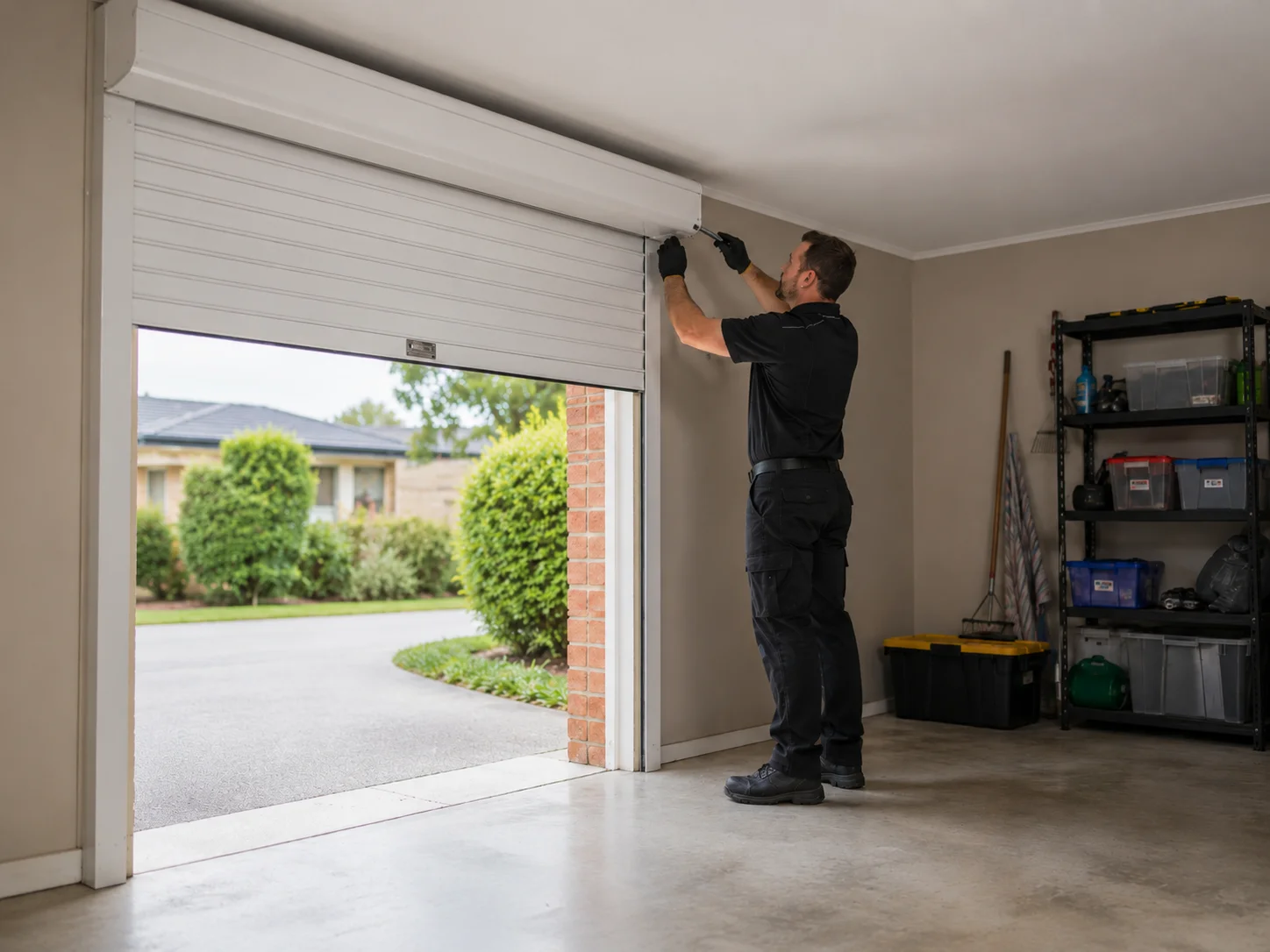
If the door is an old single skin steel up and over, every other improvement is working against it. A sheet of steel passes heat straight out, and the gaps round it can never be fully sealed because the door needs room to swing. An insulated roller door is a different object. The curtain is built from twin walled aluminium slats with a foam core to slow heat transfer, it runs in guides fixed to the brickwork, and it closes onto a shaped bottom seal. Because every TWF door is made to measure for your opening, the fit is close rather than approximate, and the top box sits neatly above the opening instead of a track running back into the roof space.
Our three ranges differ in slat depth. Standard 55 uses a 55mm by 9mm insulated slat, Premium 55 a deeper 55mm by 12.5mm slat with a more solid feel, and Classic 77 a 77mm by 18mm slat for wide and double openings. As a DIY kit, prices in the Garage Door Builder start from £505 inc VAT, and in Norfolk and Suffolk a fitted roller door starts from £949 inc VAT. If thermal performance matters more to you than headroom, an insulated sectional door is the other route, and our page on insulated garage doors sets the two side by side, as does our roller versus sectional guide.
Insulate the existing door or replace it
If a new door is not on the cards this winter, the existing one can be improved. Foil backed insulation boards or a garage door insulation kit cut to the panels of an up and over door make a real difference, provided the door is still sealed round the edges and the extra weight does not upset the springs. Our garage door insulation guide goes through the kits and the fitting step by step. Be realistic about the result: a boarded single skin door with gaps round it is better than it was, not the equal of a made to measure insulated door.
Walls, roof and floor
Once the door and the draughts are dealt with, the rest of the shell decides how warm the garage can get. A single skin wall can be lined with insulation board and plasterboard, or with insulated plywood panels in a workshop where things get screwed to the wall. The roof is often the biggest surprise: a flat felt roof or a tiled roof with open rafters loses a great deal of heat, and insulation between the joists with a vapour barrier behind a simple ceiling is a weekend job for a competent DIYer. The floor is the hardest to change. Interlocking rubber tiles or insulated flooring over the concrete make a gym or workshop far more comfortable underfoot, and they lift out again if the garage goes back to being a garage. If the garage is a car store and nothing else, leave the floor alone and spend the money on the door and the roof.
Heating a garage safely
Heat is the last step, because a heater in a leaky garage warms the street. For an occasional workshop or gym session, a plug-in electric heater on its own socket is the simplest answer: an oil filled radiator for steady background warmth, a fan heater for a quick lift, or an infrared panel above a workbench, which warms you and the bench rather than the air. Have the circuit checked if the garage socket is an afterthought on a long extension lead. Avoid portable gas and paraffin heaters: they give off water vapour as well as heat, and without ventilation they produce carbon monoxide. Never run a car engine inside the garage to warm it up. Where the garage is integral and the house has a wet heating system, a radiator on the garage wall is possible, but it changes how the space is treated under the Building Regulations, so take advice first.
Warm garages get damp unless you ventilate
Warm air holds more moisture than cold air, and the moment it meets a cold surface, a window, the steel of the car or an uninsulated wall, it condenses. So a garage that is sealed and warmed without any thought for moisture can end up wetter than it was. Keep an airbrick clear, open the door for a few minutes after bringing in a wet car, and in a garage used as a gym or laundry a dehumidifier does more for comfort than another heater. Our guide to garage condensation and damp explains the causes and the cures in detail.
The integral garage and the rooms beside it
Where the garage sits under a bedroom or beside the kitchen, a cold garage makes those rooms cold too, through the ceiling and the shared wall. An insulated garage door and a sealed opening lift the temperature of that whole corner of the house, and the door between garage and house should be insulated and sealed, not a hollow internal one. In a newer house that door will also be a fire door, so check before you change it.
Doing it in the right order
- Find and seal the gaps: bottom seal, door sides, side door.
- Decide on the door: insulate the old one for now, or replace it with a made to measure insulated roller door.
- Insulate the roof, then the walls, then the floor if the way you use the garage justifies it.
- Add an electric heater on its own circuit.
- Ventilate, or run a dehumidifier, so the warmth does not turn into damp.
Our winter preparation checklist covers the door maintenance side, and our guide to a roller door that is stiff, slow or stopping in the cold is there for the morning it misbehaves.
FAQs
How can I keep my garage warm in winter without using a heater?
Seal the gaps first: the bottom seal and sides of the garage door, the side door and any unused vent. Then insulate the door, either with a kit on an existing door or with a made to measure insulated roller door, and insulate the roof. A sealed, insulated garage holds the warmth that comes from the house wall, the car and the sun, and most people find that is enough for storage and a workshop.
Does an insulated roller garage door keep a garage warm?
It is the biggest single improvement most garages can have, because the door is usually the largest opening in the building. Our curtains are built from twin walled aluminium slats with a foam core to slow heat transfer, they run in guides fixed to the brickwork and close onto a shaped bottom seal, and because every door is made to measure the fit is close. It is one part of the answer, though: a door on its own cannot warm a garage with an uninsulated roof.
What is the cheapest way to stop draughts under a garage door?
Replace a worn bottom seal, and if the floor dips in one place, fix a strip of threshold seal to the floor where the door closes so the seal has something level to meet. On an up and over or side hinged door, add brush strips to the sides and top of the frame as well. A roller door seals its sides through the guide runners, so only the bottom needs attention.
Is it safe to use a gas heater in a garage?
Not without ventilation. Portable gas and paraffin heaters give off water vapour, which feeds condensation, and without a supply of fresh air they produce carbon monoxide. A plug-in electric heater on its own socket is the safer choice for a garage, and it only earns its keep once the gaps are sealed and the door is insulated.
Will insulating and sealing my garage cause condensation inside it?
It can, if you seal and warm the space without thinking about moisture. Warm air holds more water, and it condenses on the first cold surface it meets, such as a window, the car or an uninsulated wall. Keep an airbrick clear, open the door for a few minutes after bringing in a wet car, and use a dehumidifier in a garage that serves as a gym or laundry.
Can I make my existing garage door warmer without replacing it?
Yes, up to a point. Foil backed insulation boards or a garage door insulation kit cut to the panels of an up and over door make a real difference, provided the edges are sealed and the extra weight does not upset the springs. Our garage door insulation guide covers the kits and the fitting. A boarded single skin door with gaps round it is better than it was, but it is not the equal of a made to measure insulated door.
Key takeaways
- The door is the biggest opening, but the roof, walls, floor and gaps all leak heat too.
- Seal under and around the door first; it is the cheapest win.
- An insulated roller door, made to measure, is the single biggest improvement most garages can have.
- Heat last, with electric on its own socket; never gas or paraffin without ventilation.
- Warmth brings moisture: ventilate or dehumidify.
Conclusion
A warm garage in winter is a sealed, insulated garage with a little heat added, in that order. The door is where most people start because it is the biggest hole in the wall, and an insulated roller door made to your opening closes it properly. Price one in the builder, or if you are in Suffolk or Norfolk, book a free survey and we will measure it for you. Then do the roof, and the heater will finally have something to work with.
Written by the TWF team, who have manufactured and fitted roller garage doors from Norfolk for over 25 years. Last updated: 11 December 2026.