Measuring for a new garage door in the UK starts with two choices: roller or sectional, made to measure. Accurate measurements prevent fitting delays, improve security, and keep your door running smoothly for years.
Roller vs sectional: what you measure is different
Electric roller garage doors need clear headroom for the top box and guide runners. Electric sectional garage doors need headroom plus ceiling depth for the tracks. Measure the opening width and height, then confirm headroom and ceiling clearance for the style you want.
Step 1: Check the lintel is level
Place a spirit level on the bottom of the lintel. If it is level, make a pencil mark at the bottom of the lintel on each side of the brickwork. If it is not level, mark two level points on the brickwork near the lintel and use those as your reference line.
Step 2: Measure headroom for roller doors
For a TWF55 roller door you need at least 210mm from the underside of the lintel to the ceiling or roof rafters. For a TWF77 roller door you need 305mm. If you do not have enough space, measure down from the lowest point of the ceiling or rafters by 210mm (TWF55) or 305mm (TWF77), then mark that point on the wall and level across to the other side.
Step 3: Measure guide runner length (behind fit)
After marking the level reference, measure from the floor up to the pencil marks. That measurement is the cut length for each guide runner. The letter F on the guide runner marks the front face and should sit against the wall. For best results, cut the runners from the bottom with a metal hacksaw or cutting disc.
Step 4: Measure guide runner length (between and under-lintel fit)
Level a line across the underside of the lintel, then measure down 210mm (TWF55) or 305mm (TWF77) and mark both sides. Measure from the floor to those marks and cut your guide runners to that length. This method sets the runner height correctly when the door is fitted between the brickwork.
Opening width and height: record three points
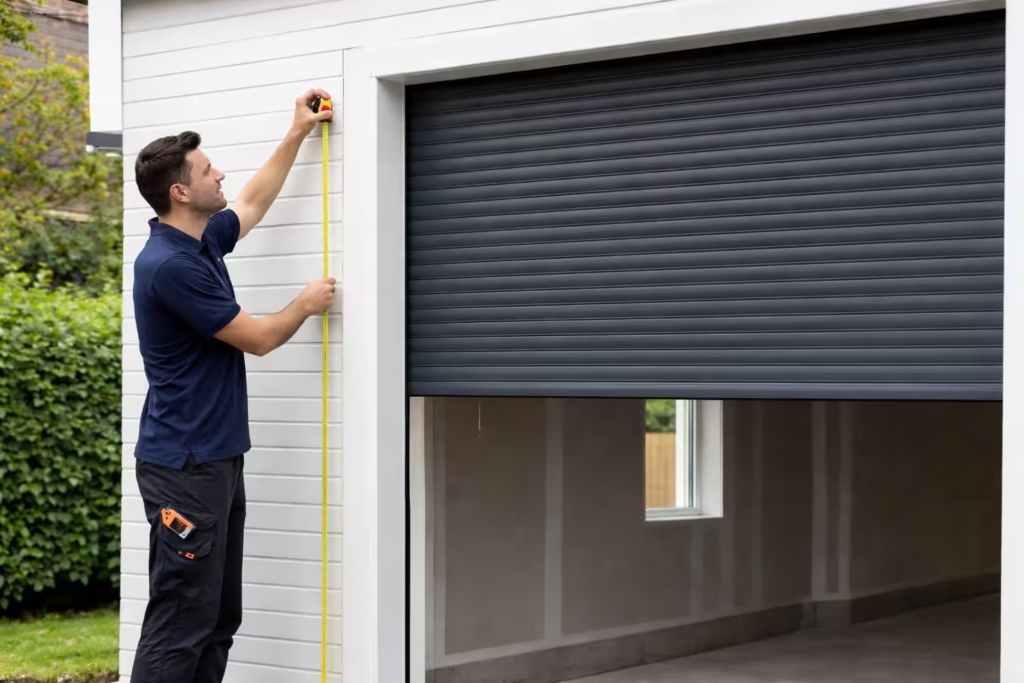
Measure the opening width at the top, middle, and bottom. Do the same for height on the left, middle, and right. Use the smallest width and height to avoid ordering a door that is too large for the opening. Always measure brick-to-brick for the structural opening.
Typical measurement options
Use this as a planning guide and confirm exact pricing in the garage door builder.
| Door type | Slat size or panel thickness | Typical installed cost (single) | Typical installed cost (double) |
|---|
| Electric roller door | 55mm slats | £1,400 – £2,000 | £2,600 – £3,400 |
| Electric roller door | 77mm slats | £1,700 – £2,400 | £3,000 – £4,000 |
| Electric sectional door | 40 – 45mm panels | £2,200 – £3,200 | £3,400 – £4,800 |
Common measurement mistakes to avoid
- Measuring only one point: Always measure width and height at three points and use the smallest values.
- Ignoring the lintel level: A sloped lintel changes guide runner height and can cause the door to bind.
- Skipping headroom checks: Roller doors need 210mm (TWF55) or 305mm (TWF77) above the lintel.
- Assuming standard sizes: Many UK openings are not standard and require made-to-measure doors.
- Not checking fixing points: Guide runners should be fixed to solid brickwork where possible.
Planning electrics and safety from the start
While all our doors are electric, you should allow for the right safety and access features from day one. Safety edges help protect people, pets, and vehicles, and an external manual override is recommended if the garage has no other access. If you are adding an automation upgrade, the typical cost (with us it’s between £119-£150) depends on the control hardware.
Retrofitting and smart upgrades
If you are keeping an existing door, accurate headroom and runner measurements help confirm whether retrofitting is suitable. For smart access, you can add a smart garage door controller to enable app control without changing the door type.
Get a price once you have your measurements
For fast pricing, use the garage door builder to size and price a roller door. If you plan to fit it yourself, the DIY roller garage door order form shows current options and pricing. Please note that we only provide installation services within Norfolk and Suffolk.
FAQs
How to properly measure a door for replacement?
Measure the opening width and height at three points (top, middle, bottom) and use the smallest width and height. Check the lintel is level and confirm headroom: 210mm for TWF55 or 305mm for TWF77. If headroom is tight, measure down from the lowest point of the ceiling or rafters and use that line for your guide runner height.
What is the normal width of a 2 car garage?
In the UK, a typical two-car garage is around 5.5m to 6.0m wide internally, with larger layouts closer to 6.0m to 7.3m if you want storage or workbench space. Door openings for double garages are commonly around 4.3m to 4.9m wide depending on the design.
Does a garage door have to be the exact size?
Yes, it needs to match the actual opening size. Most roller and sectional doors are made to measure, so you should order to your recorded brick-to-brick opening. If your opening is not standard, custom sizing is normal and avoids gaps or rubbing.
What is a standard two car garage door size?
The most common double size is 16 ft x 7 ft (4877mm x 2134mm). Another standard size is 14 ft x 7 ft (4267mm x 2134mm). A 2.13m height suits most cars, while 2.44m is better for taller vehicles or roof racks.
What are common garage layout mistakes?
Leaving bikes or storage on the floor is a common mistake because it blocks parking access and creates trip hazards. Other issues include shelving that clashes with guide runners, leaving no clearance for mirrors, and storing bulky items where the door or tracks need space.
Is it cheaper to build a garage or buy a kit?
Prefab garage kits are usually cheaper than building from scratch because materials are pre-cut and labour time is shorter. In the UK, a kit can often save several thousand pounds in labour compared with a full build, but exact costs depend on size, foundations, and finishes.
What are common mistakes when measuring a door?
Not removing trim, measuring only once, ignoring lintel level, assuming standard sizes, and skipping headroom checks are the main causes of poor fit. Always measure multiple points and confirm solid fixing points for guide runners.